Why Is My Machine Learning Model Slow, and How Can I Fix It Fast?
If your machine learning model slow issue is holding back your project, it can be really frustrating. Models taking too long to process data or run calculations can waste your time and resources. You might be trying to get results quickly, but everything just seems to drag. Just like choosing the right strategy in SEO vs AEO, picking the right approach for optimizing your model can make all the difference. This is a common problem, and it doesn’t mean your project is doomed, there are practical ways to fix it.
Once you understand the problem, you can take steps to speed things up and get your models working efficiently. Below is a simple snapshot of common causes and quick fixes:
Reason
Quick Fix
Large dataset
Use sampling or focus on key features
Inefficient algorithm
Optimize code or switch to a faster method
Poor hardware
Consider better hardware or cloud solutions
Untidy data
Clean and preprocess data efficiently
Complex model
Simplify or compress model for faster results
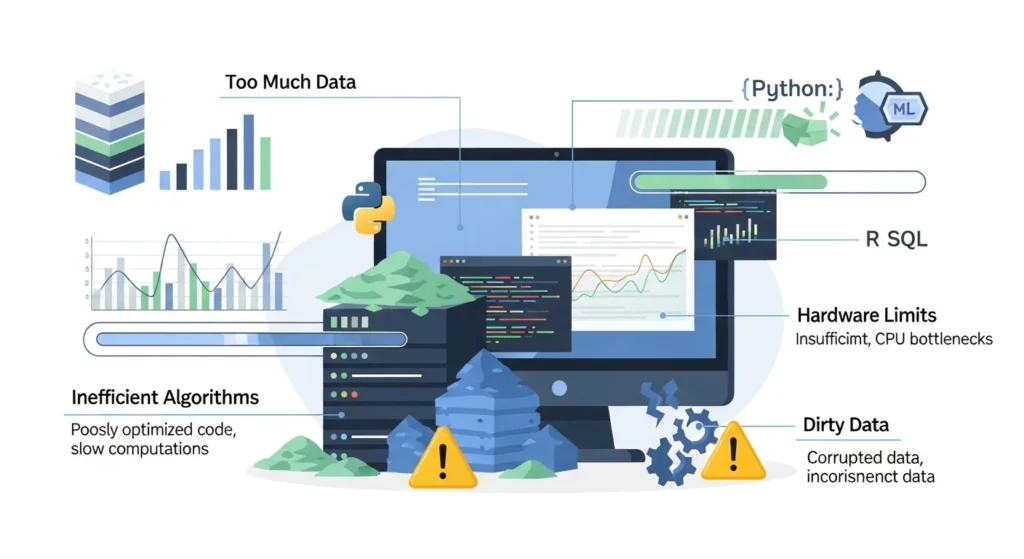
Common Reasons for a Machine Learning Model Slow
Understanding why your machine learning model is slow is the first step to solving it. Some common reasons include:
Too much data: Huge datasets take a lot of time to process.
Inefficient algorithms: Certain models are naturally heavier and slower.
Hardware limits: Your computer may not be able to handle large computations efficiently.
Dirty or unprocessed data: Unclean data makes training longer and less accurate.
Quick Solutions to Speed Up Your Model
Here’s how you can fix your machine learning model slow problem quickly:
Optimize your code: Simplify loops and use efficient libraries.
Use better hardware: Upgrade your computer or switch to cloud resources.
Reduce dataset size smartly: Focus on important features or sample data instead of using everything.
Compress your model: Smaller models are faster without losing accuracy.
Advanced Techniques to Improve Model Performance
For more complex models or large projects, these advanced steps can help:
Parallel processing: Run tasks simultaneously to save time.
Feature engineering: Use only the features that add real value.
Caching results: Store intermediate results to avoid recalculating repeatedly.
Profiling tools: Use software to identify the slowest parts of your model.
Best Practices to Prevent Future Slowness
Avoid getting stuck with a machine learning model slow issue again by following these tips:
Always clean and organize your data before starting.
Choose simpler models when possible.
Monitor model performance regularly to spot bottlenecks early.
Apply parallel processing when supported.
When to Hire an Expert
Sometimes, no matter what you try, the model remains slow. That’s when getting professional help is the best solution:
Complex models require tailored optimization.
Production-level deployment often needs expert guidance.
Custom solutions save time and ensure results without compromising accuracy.
Regularly, especially after updates or adding new data, to prevent slowdowns.
Conclusion
A machine learning model slow problem doesn’t have to stop your project. By understanding the root cause and applying the right fixes, you can dramatically improve speed and efficiency. For complex situations, expert help ensures your model runs smoothly without wasting time or resources. At XtremeTech, we specialize in making slow models fast, reliable, and efficient, so you can focus on achieving results with confidence.
Share:
Request a Custom Portfolio Showcase
Tell us about your project requirements, and we’ll send you tailored case studies from our AI and Web Development archives.